
Patients seeking platelet-rich plasma (PRP) therapy for hair loss often want to know how much it will cost, what’s included, and how prices compare across countries. This guide answers these questions for five leading destinations: India, Turkey, Thailand, the US, and the UK.
Expect to pay between $120 and $700 per PRP session depending on where you go. Costs per session are lowest in India and highest in the US and UK, but package deals and quality of care also vary. Here’s what you need to know to plan your treatment and budget effectively.
What is PRP therapy for hair loss?
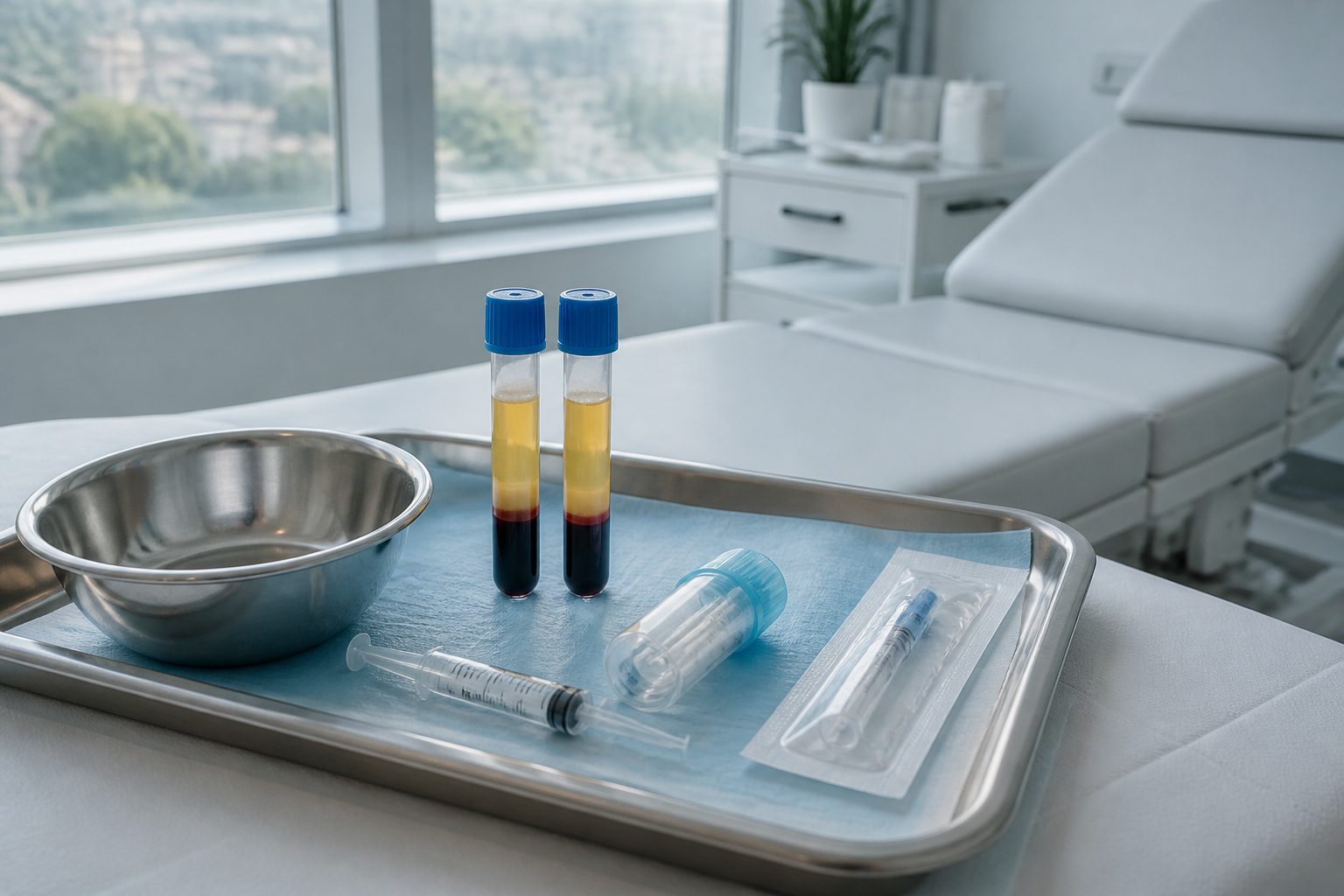
PRP therapy, or platelet-rich plasma therapy, is a regenerative medical procedure designed to combat hair loss by harnessing the healing and growth-stimulating properties of your own blood. The process begins with a blood draw, typically from your arm. The collected blood is then placed in a centrifuge, a machine that spins at high speed to separate its components. This process isolates the plasma, which is rich in platelets—cell fragments known for their role in healing and tissue regeneration.
The resulting platelet-rich plasma is then carefully injected into areas of the scalp where hair is thinning. The theory is that the concentrated growth factors in PRP stimulate dormant or weakened hair follicles, prolonging their growth phase and potentially increasing hair density and thickness. The procedure is considered minimally invasive and is usually performed in a clinic or medical office setting. Most patients experience only mild discomfort during the injections, and there is little to no downtime, allowing you to resume normal activities shortly afterward.
Clinics worldwide generally recommend an initial series of 3 to 4 PRP sessions, each spaced about a month apart. This is followed by maintenance treatments every 4 to 6 months, depending on your response and the severity of your hair loss. In some countries, such as the US and UK, PRP is often offered as a standalone treatment or as an adjunct to other hair restoration methods, like hair transplant surgery. In Turkey and Thailand, it is commonly bundled with transplant packages or other therapies for international patients.
PRP therapy is suitable for both men and women, particularly those experiencing androgenetic alopecia (also known as male or female pattern baldness). It may also benefit people with certain other types of non-scarring hair loss. However, results can vary based on the underlying cause of hair loss, age, and overall health. Consulting with a qualified dermatologist or hair specialist is crucial to determine if you are a good candidate for PRP therapy.
How much does PRP therapy cost in 5 countries?
PRP therapy is priced per session, and clinics may also offer discounted package deals for multiple sessions. The table below compares average per-session prices in India, Turkey, Thailand, the US, and the UK. Local currency equivalents are shown for reference. Prices may vary by city and clinic reputation.
| Country | Average cost per session | Typical package (3 sessions) | Currency (approx.) | What’s usually included |
|---|---|---|---|---|
| India | $120–$180 (₹10,000–15,000) | $340–$500 (₹28,000–41,000) | ₹ | Consultation, PRP kit, scalp injections, basic aftercare |
| Turkey | $180–$300 (₺5,800–9,700) | $500–$850 (₺16,000–27,500) | ₺ | Consultation, PRP kit, scalp injections, aftercare, translation |
| Thailand | $200–$350 (฿7,200–12,500) | $600–$1,000 (฿21,500–35,900) | ฿ | Consultation, PRP kit, scalp injections, follow-up |
| USA | $400–$700 | $1,100–$2,000 | $ | Consultation, PRP kit, injections, follow-up |
| UK | $450–$650 (£350–£500) | $1,250–$1,800 (£970–£1,400) | £ | Consultation, PRP kit, injections, aftercare |
What is and isn’t included in PRP prices?
When comparing PRP therapy prices across different countries and clinics, it’s important to understand exactly what is included in the quoted fee and what you might need to pay for separately. Most reputable clinics include several core elements in the base price:
- Initial consultation: This is your first meeting with the doctor or specialist, where your suitability for PRP is assessed and your questions are answered. Some clinics, especially in India and Turkey, may offer this for free, while others in the US and UK might charge separately if you don’t proceed with treatment.
- Sterile PRP kit: The use of a high-quality, single-use kit for blood collection and plasma separation is typically included. Premium clinics, particularly in the US and Western Europe, may use advanced closed systems, which are more expensive but reduce infection risk.
- The procedure itself: This covers drawing your blood, processing it in a centrifuge, and injecting the PRP into your scalp. The number of injections and the technique may vary, but the entire session is generally part of the quoted price.
- Basic aftercare instructions: Most clinics provide written or verbal guidance on caring for your scalp post-procedure, including what to avoid and when to resume normal hair care routines.
- Follow-up visits: Some clinics, especially those in medical tourism hubs like Turkey and Thailand, bundle at least one follow-up appointment or online check-in. In the US and UK, follow-ups may be charged separately unless you purchase a multi-session package.
- International patient extras: In countries with a large influx of overseas patients, such as Turkey and Thailand, premium clinics may include airport transfers, translation services, or even hotel arrangements in their packages. These perks are less common in India, the US, and the UK.
What is not included? Typically, you’ll need to pay extra for any medications prescribed for aftercare, such as painkillers, anti-inflammatory drugs, or topical solutions. Additional blood tests, especially if you have underlying health conditions, are often billed separately. Extended or unscheduled follow-up appointments, as well as consultations with other specialists (like endocrinologists), may also incur extra charges. If you are combining PRP with a hair transplant, some clinics offer bundled packages where PRP is discounted or included, but this isn’t universal.
Always request a comprehensive, itemized quote in writing before agreeing to treatment. Clarify if taxes, administrative fees, or extra services are included, and ask about the cost of additional sessions if needed. This approach ensures you have a clear understanding of your financial commitment and helps you avoid unexpected costs during your PRP journey.
Hidden costs and potential extras
When planning to undergo PRP therapy for hair loss abroad, it’s essential to look beyond the base price quoted by clinics and anticipate a range of possible extra costs. These hidden expenses can significantly affect your total outlay, especially when traveling internationally. Understanding these factors will help you budget accurately and avoid surprises later on.
- Travel and accommodation: The cost of flights, trains, or buses to your destination country is almost never included in the clinic’s price. In popular medical tourism destinations like Turkey and Thailand, you may find package deals with discounted hotel stays, but in countries like India, the US, and the UK, you’ll usually need to book and pay for your accommodation separately. Prices can vary widely based on travel season, hotel class, and proximity to the clinic.
- Transfers: Airport pickup and local transportation between your hotel and the clinic are sometimes offered in Turkey and Thailand, particularly by clinics catering to international patients. However, in India, the US, and the UK, you’ll likely need to arrange and pay for taxis, rideshares, or public transport yourself. This can add up, especially if your accommodation is far from the clinic.
- Lab tests: Before PRP therapy, clinics may require blood tests to check your general health, platelet count, or screen for infections. If you have underlying health conditions or are over a certain age, additional lab work might be necessary. In some countries, these tests are bundled in the package, but elsewhere, especially in the US and UK, they are billed separately.
- Medications: Aftercare products such as topical solutions, painkillers, or anti-inflammatory medications are seldom included in the procedure cost. You may also be advised to purchase specific shampoos or nutritional supplements, which can be more expensive in the clinic’s pharmacy than at home.
- VAT/taxes: In many European countries, including the UK, Value Added Tax (VAT) or similar taxes may not be included in the initial quote. In the US, state and local taxes can also apply. Always clarify whether the price you see is the final amount or if taxes will be added.
To avoid unexpected expenses, always request a detailed, written quote that lists all potential extras. Ask the clinic directly about what is and isn’t included, and factor in the cost of travel, accommodation, and any post-treatment needs. If you require a visa, don’t forget to include application fees and related costs. Preparing for these extras will help you plan a realistic budget and ensure a smoother experience abroad.
How to save safely on PRP therapy abroad
To keep costs down without sacrificing safety or quality, consider these strategies:
- Compare package deals: Most clinics offer discounts for booking three or more sessions at once. Ask if maintenance sessions are discounted for returning patients.
- Look for off-peak pricing: Some clinics offer lower rates during less busy periods.
- Choose clinics near major airports: This can reduce transfer costs and simplify logistics for short trips.
- Check accreditations: In India and Thailand, look for NABH or JCI-accredited hospitals and clinics. In Turkey, seek clinics with a strong track record with international patients.
- Verify the PRP kit: Ask if the clinic uses FDA- or CE-approved PRP kits, as these are more likely to be sterile and yield higher platelet concentrations.
Do not choose a clinic based on price alone. The experience and training of the doctor, quality of the PRP system, and cleanliness of the facility are more important for safety and results.
What drives the price of PRP therapy?
The cost of PRP therapy for hair loss varies significantly depending on a combination of geographic, clinical, and procedural factors. Understanding what drives these price differences can help you make informed decisions and compare options across countries more effectively.
- Country and city: Geographic location is one of the most significant determinants of PRP price. India generally offers the lowest prices due to lower labor and operational costs, with sessions often starting at a fraction of Western prices. Turkey and Thailand are moderately priced and popular with international patients, partly because of competitive pricing and bundled services. The US and UK have the highest costs, reflecting higher overheads, regulatory requirements, and staff salaries—expect to pay several times more per session compared to Asia.
- Clinic reputation: Clinics with renowned doctors, international accreditations, or a long track record of successful outcomes tend to charge more. In Turkey, for example, leading clinics in Istanbul may cost more than smaller regional providers. The same is true in the US and UK, where high-profile dermatologists or hair surgeons command premium fees.
- PRP kit quality: The type of PRP system used can impact both safety and efficacy. Single-use, closed-system PRP kits, which are designed to minimize contamination and maximize platelet concentration, are more expensive than generic or open systems. Clinics in the US, UK, and premium centers in Turkey and Thailand often highlight their use of FDA- or CE-approved devices, which adds to the cost but can provide peace of mind regarding safety standards.
- Number of sessions: PRP is rarely a one-off treatment. Most patients require an initial series of 3-4 sessions, and some clinics require upfront payment for a package, which may offer a discount per session. In India and Thailand, pay-as-you-go options are common, while in the US and UK, pre-paid packages are often encouraged.
- Extra services: Additional amenities such as translation, airport transfers, or luxury facilities (private rooms, spa treatments, concierge services) can add significantly to the total price. In Turkey and Thailand, such extras are sometimes bundled for international patients, while in the US and UK, most of these services are not included and must be arranged independently.
To protect yourself from hidden fees and ensure you’re comparing apples to apples, always ask for a detailed breakdown of what is included in the quoted price. If a price seems unusually low, it may be due to the use of lower-quality PRP kits, less experienced staff, or the absence of aftercare and support services. Confirm that the clinic is licensed to perform cosmetic procedures and inquire about the specific PRP technology used. Taking these steps will help you balance cost with safety and quality in your search for effective PRP therapy.
How to choose a PRP clinic abroad
Selecting the right clinic for PRP therapy in another country involves careful research and consideration of several key factors. Since PRP is a medical procedure, your safety, results, and overall experience depend heavily on the clinic’s standards, staff qualifications, and patient support services. Here’s a step-by-step guide to making an informed choice:
- Doctor qualifications: Choose clinics where PRP is performed by board-certified dermatologists, plastic surgeons, or hair restoration specialists. Inquire about their training, years of experience, and how frequently they perform PRP procedures. For example, in Turkey and Thailand, top clinics often highlight their doctors’ international fellowships or memberships in professional societies. In the US and UK, check for state or national medical board certifications.
- Clinic accreditation: Accredited clinics are more likely to follow strict safety and hygiene protocols. Look for international accreditations such as JCI (Joint Commission International), NABH (National Accreditation Board for Hospitals & Healthcare Providers) in India, or other recognized bodies. Accreditation is a good indicator of quality, especially in countries where healthcare standards can vary widely.
- International patient services: Clinics with experience treating overseas patients often provide multilingual staff, help with travel logistics, and aftercare support. In Turkey and Thailand, many clinics offer dedicated coordinators who assist with airport transfers, hotel bookings, and translation. In India, some top clinics have similar services, though they may be less common in the US and UK.
- Transparency: Reputable clinics provide clear, written breakdowns of costs, treatment protocols, and aftercare instructions. They should be open about what is included in the price and any possible extras. Avoid clinics that are vague about pricing or pressure you for quick decisions.
- Reviews and before/after photos: Check for independently verified reviews on platforms like Google, Trustpilot, or RealSelf. Ask to see before-and-after photos of previous patients (with their consent) to assess the clinic’s results. In countries with less regulation, be wary of overly polished or generic testimonials.
Before committing, schedule an online or phone consultation to discuss your goals, medical history, and expectations. This is your chance to assess the clinic’s communication, professionalism, and willingness to answer questions. Ask about the PRP system used, the protocol they follow, and what support is available if you have concerns after returning home. Steer clear of clinics that offer unrealistic guarantees or push for immediate payment. Taking these steps will help ensure you choose a safe, reputable clinic for your PRP therapy abroad.
Planning your PRP trip: practical tips
Here are practical steps to plan your PRP therapy abroad:
- Schedule enough time: Each session takes about 1-2 hours, with minimal downtime. If you are booking multiple sessions, plan for a 3-4 week stay or return trips.
- Check visa requirements: Some countries offer medical visas or allow short stays for treatment. Confirm entry rules before booking.
- Bring medical records: A summary of your hair loss history, prior treatments, and any allergies can help your doctor tailor the protocol.
- Arrange for aftercare: While PRP has little downtime, minor swelling or tenderness is normal. Avoid strenuous activity for 24 hours after each session.
- Plan for follow-up: Maintenance sessions may be needed every 4-6 months. Ask your clinic about remote follow-up or coordination with a local doctor.
Early planning helps ensure a smooth experience and optimal results from your PRP therapy abroad.
Frequently asked questions
How many PRP sessions are usually needed for hair loss?
Most patients require an initial series of 3–4 sessions, spaced about one month apart, to see noticeable results. After this, maintenance sessions every 4–6 months may be recommended. Your doctor will advise based on your hair loss pattern and response.
Is PRP therapy safe for international patients?
PRP therapy is generally considered safe when performed by experienced professionals using sterile, single-use kits. International patients should choose accredited clinics and clarify infection control measures. Allergic reactions are rare, as your own blood is used.
Can PRP therapy be combined with a hair transplant?
Yes, PRP is often used alongside hair transplant surgery to improve healing and potentially enhance graft survival. Some clinics include PRP sessions in their hair transplant packages. Discuss combination options and additional costs with your provider.
How soon can I travel after a PRP session?
Most patients can travel the same day as their PRP session, as it is minimally invasive with little downtime. Mild swelling or tenderness is common but does not typically interfere with travel. Follow your clinic’s aftercare advice for best results.
Are there alternatives to PRP for hair loss?
Alternatives include medications (minoxidil, finasteride), low-level laser therapy, and hair transplant surgery. PRP is suitable for certain types of hair loss but may not be effective for all patients. Consult a qualified doctor to discuss the best option for your case.
Related guides
Disclaimer: Prices in this guide are indicative and may vary by clinic, city, and individual case. Always request a written quote and consult a qualified doctor before starting PRP therapy for hair loss.